AI Has Become Easy to Buy
Everyone is selling AI.
Every software vendor now claims to have AI.
Every consultancy offers AI strategy.
Every conference promises AI transformation.
The problem isn't access to AI anymore.
It's knowing where it will actually create value.
Many organisations begin by asking:
"Which AI platform should we use?"
I think that's the wrong first question.
The First Question
Where Will AI Create Measurable Business Value?
AI isn't a strategy.
It's a capability.
Business value comes from solving problems.
Not deploying technology.
The conversation should begin with questions like:
- Which process consumes the most time?
- Which teams repeat the same work every day?
- Where do delays occur?
- What decisions depend on searching through documents?
- Which customer interactions are largely repetitive?
- Which internal processes frustrate employees?
Once those questions are answered, AI opportunities become much clearer.
The Second Question
Is The Organisation Ready To Operate AI?
This is where many initiatives quietly fail.
People assume:
Build AI → Job Done.
Reality is:
Build AI → Operate AI.
Can your organisation support:
- governance
- security
- ownership
- deployment
- monitoring
- user adoption
- continuous improvement
If not,
the AI isn't the problem.
Readiness is.
Technology Is Rarely The Biggest Barrier
One of the biggest surprises for organisations beginning their AI journey is this:
Technology usually isn't the constraint.
More often it's:
- poor data
- unclear ownership
- disconnected systems
- manual processes
- uncertain priorities
Buying another AI tool won't solve those issues.
Understanding them will.
Why Most AI Roadmaps Fail
Many AI roadmaps look like technology plans.
Buy this.
Implement that.
Train staff.
Deploy chatbot.
Real roadmaps start differently.
They ask:
What business outcome are we trying to improve?
Only then do they decide whether AI belongs in the solution.
Sometimes it does.
Sometimes it doesn't.
Good AI strategy includes saying:
"Don't build AI here."
Five Signs You're Ready
You're probably ready if:
- Leadership understands why AI is being introduced.
- Business problems are clearly defined.
- Data exists in a usable form.
- Someone will own the solution after launch.
- Success can be measured.
Five Signs You're Not
Warning signs include:
- Looking for problems to fit AI.
- Starting with technology.
- Expecting AI to replace everyone.
- No operational owner.
- No success metrics.
Every Organisation Starts Somewhere
Not every business needs a large AI programme.
Sometimes the right first project is surprisingly small.
A document assistant.
Proposal automation.
Customer support triage.
Internal knowledge search.
Small wins build confidence.
Confidence builds capability.
Capability builds transformation.
Why We Created The AI Readiness Assessment
After dozens of conversations with organisations exploring AI, we noticed the same pattern.
Everyone wanted to know:
"Where do we start?"
That's why we built our AI Readiness Assessment.
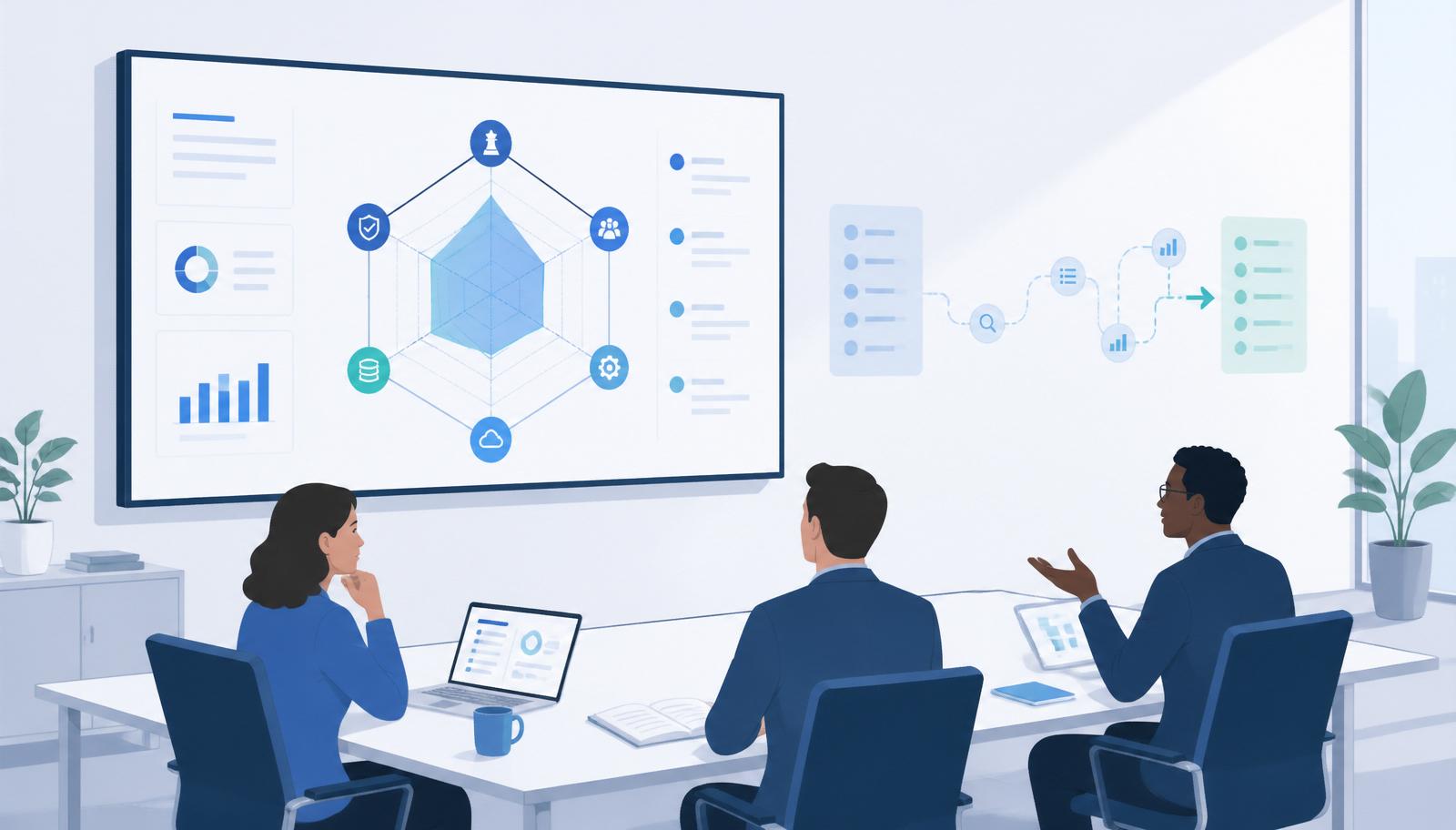
Rather than producing another generic AI maturity score, it examines six practical areas:
- Strategy
- People
- Processes
- Technology
- Data
- Governance
The result isn't simply a score.
It's a conversation starter.
It highlights:
- where you're already strong
- where risks exist
- which AI projects are likely to deliver value first
Final Thought
AI is moving incredibly quickly.
The organisations that benefit most won't necessarily be those that adopt it first.
They'll be the organisations that adopt it thoughtfully.
Before investing in another platform…
Before building another prototype…
Before hiring another consultancy…
Ask two simple questions.
Where will AI genuinely improve our business?
Are we ready to operate it successfully?
If you can answer those confidently, you're already ahead of many organisations beginning their AI journey.
Key Takeaways
- AI is a capability, not a strategy — value comes from solving business problems, not from deploying technology.
- The first question is where AI will create measurable business value; the second is whether your organisation is ready to operate it.
- Technology is rarely the constraint. Data, ownership, priorities and process clarity usually are.
- Good AI strategy includes saying "don't build AI here" when that's the right answer.
- Start small. Confidence builds capability. Capability builds transformation.
Relevant Services
- AI Readiness Assessment — structured diagnostic of strategy, data, technology, governance and people.
- AI Strategy Consulting — decide where AI investment will and will not pay back.
- Custom AI Development — build the AI workflow, tightly fitted to how your business actually operates.
- Prototype to Production — take a working prototype to a secure, monitored production system.
- Managed AI Hosting — ongoing operation, monitoring and improvement of live AI systems.
Author
Vikram Katyani — Founder, IntelliMinds Digital.
Helping organisations move AI from experimentation into production through practical strategy, custom development and managed AI operations.