
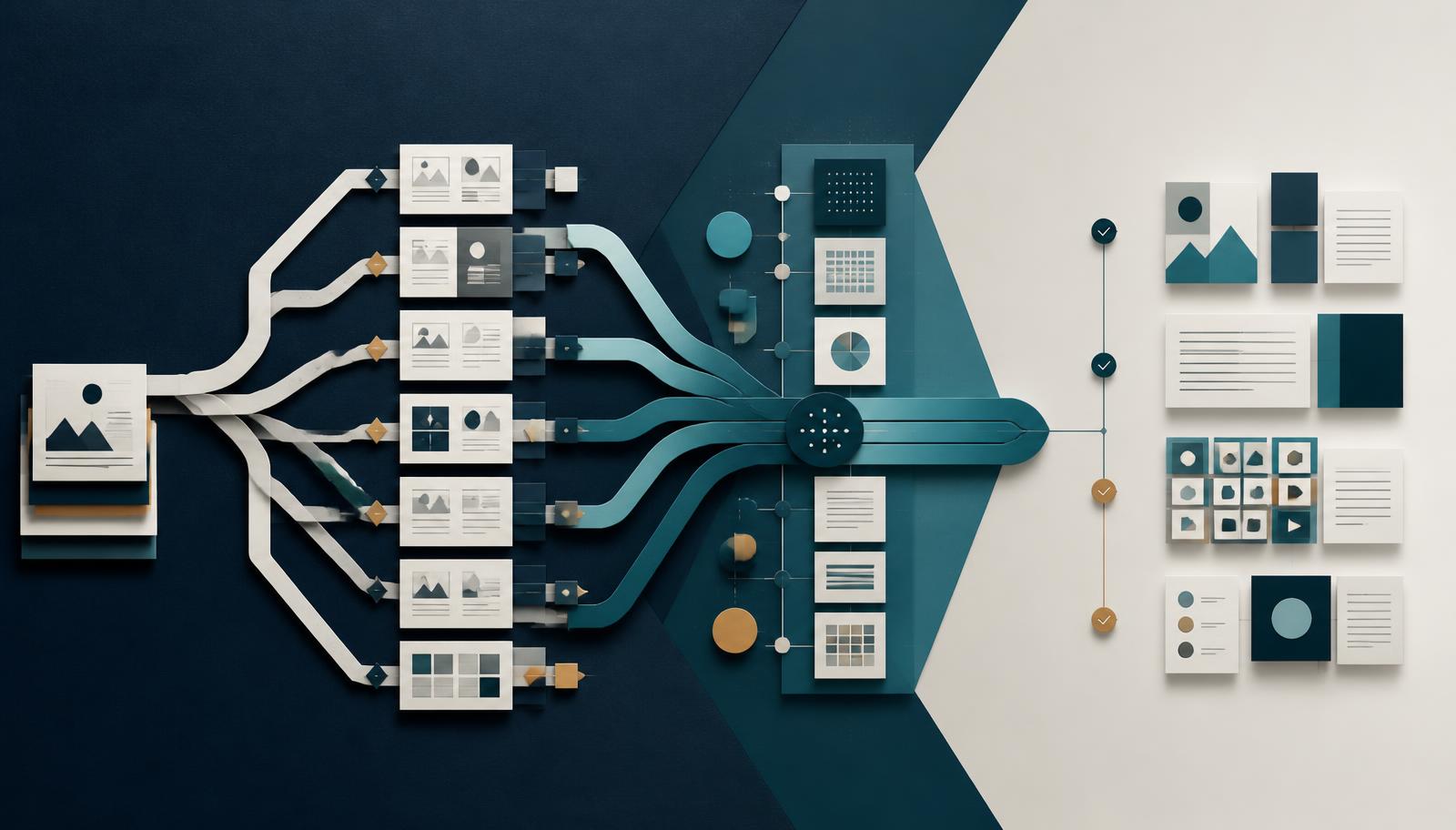
Something that would have been difficult 10 years ago is now becoming accessible
I’ve been involved in learning technology for a long time, and recently I’ve been experimenting with what AI can do with learning development.
One example was a fully AI-generated branching scenario.
The AI created the scenario, the branching logic, the contextual responses and the supporting visuals.
The learner makes a choice.
The scenario responds.
The context changes depending on that choice.
And the visuals can be generated to follow the organisation’s existing brand guidelines.
The client I was demonstrating it to was genuinely surprised by how far this has come.
And it took me back to how difficult this type of development used to be.
Branching scenarios have always been relatively expensive to build well.
A change near the beginning of a decision tree could mean revisiting multiple branches underneath it.
More development.
More testing.
More cost.
AI Isn’t Replacing Instructional Design
AI doesn’t magically solve the instructional design problem.
You still need someone to decide:
- What should the learner experience?
- What decisions actually matter?
- What should happen when they get it wrong?
- Does the scenario teach what it is supposed to teach?
These are not simply production questions.
They require an understanding of the learner, the context, the objective and the behaviour you are trying to influence.
But AI can dramatically reduce the amount of effort involved in turning that thinking into a working experience.
That distinction matters.
There is a difference between producing learning content and designing effective learning.
AI is becoming increasingly capable of helping with the first.
The second still requires judgement, context and expertise.
The Economics Are Changing
And there’s another part that I find particularly interesting.
What happens when the learning needs to change?
With a well-structured AI development workflow, you can retain the source material, prompts, context and editable output.
That doesn’t mean future changes happen automatically.
They still need human review, testing and instructional judgement.
But you have a much better starting point for making those changes than simply going back to the beginning.
The economics of learning development are changing.
And I think this points to something bigger.
In my experience, a significant amount of corporate learning has relatively predictable requirements.
The audience is known.
The objective is clear.
The source material already exists.
The challenge is turning that material into something clear, digestible and appropriate for the learner.
That’s exactly the kind of production work AI is going to put pressure on.
What Does That Mean for Learning Developers?
And we should be honest about what that means.
Some learning development work will become much faster.
Some will become much cheaper.
And, inevitably, organisations will ask whether they need the same amount of production resource they needed before.
So if you work in learning development, should AI get your attention?
Absolutely.
But I don’t think the answer is to compete with it.
Learn how to use it.
Learn how to direct it.
Learn how to evaluate what it produces.
And spend more of your time on the things AI finds much harder:
- Understanding the real learning problem.
- Making good instructional decisions.
- Creating meaningful experiences.
- Understanding behaviour and context.
- Knowing when the technology is — and isn’t — the right answer.
The Learning Developer of the Future
The future of learning development probably isn’t AI replacing learning professionals.
But I do think it will be learning professionals who know how to work with AI replacing much of the old production model.
And that transition has already started.
The opportunity isn’t to become less human.
It’s to spend less time on predictable production work and more time applying the expertise that actually makes learning effective.
Author
Vikram Katyani — Founder, IntelliMinds Digital.
Vikram works across AI implementation, learning technology and digital transformation, with experience building LMS platforms, learning technology and AI-powered systems.